Investing in Silver Miners with SLVX: How Industrial Trends are Influencing Demand
Last Updated:

I’ve been a gold investor for a while now. Silver, on the other hand, never really made it onto my radar in a serious way. I knew it was cheaper than gold on a per-ounce basis, and that it could tarnish over time. But beyond that, it felt more like a secondary option than a core allocation.
That changed recently, and part of it came from conversations close to home. One of my neighbours is what you might call a “silverbug,” and that led me to take a deeper look. What I learned is that silver is actually an important industrial input. In that sense, it has a lot in common with metals like copper.
Silver is highly ductile, meaning it can be stretched into extremely thin wires without breaking. It is also one of the best electrical conductors among all metals. Those properties make it essential across a wide range of applications. Silver is used across a wide range of industrial applications.
That was the shift for me: understanding silver as not just something you store, but something that gets used. Even so, I haven’t gone out and bought physical silver. Storing bullion has its own considerations regarding spreads and insurance, and I tend to allocate most of it through ETFs.
That led me to look at how silver is actually represented in portfolios. There are direct approaches through spot ETFs, but what stood out more was the role of silver mining equities.
If the case for silver is tied to demand growth, particularly from industrial uses, then miners are a potentially potent way to express that view. They sit upstream in the value chain, with revenues tied to the production and pricing of the metal itself.
For investors thinking about silver as a theme rather than just a store of value, that distinction is worth understanding. One way to express that view is through silver mining equities, and for Canadian investors, the newly launched Global X Silver Miners Index ETF (SLVX) is one such option.
Silver’s Role as a Key Industrial Input
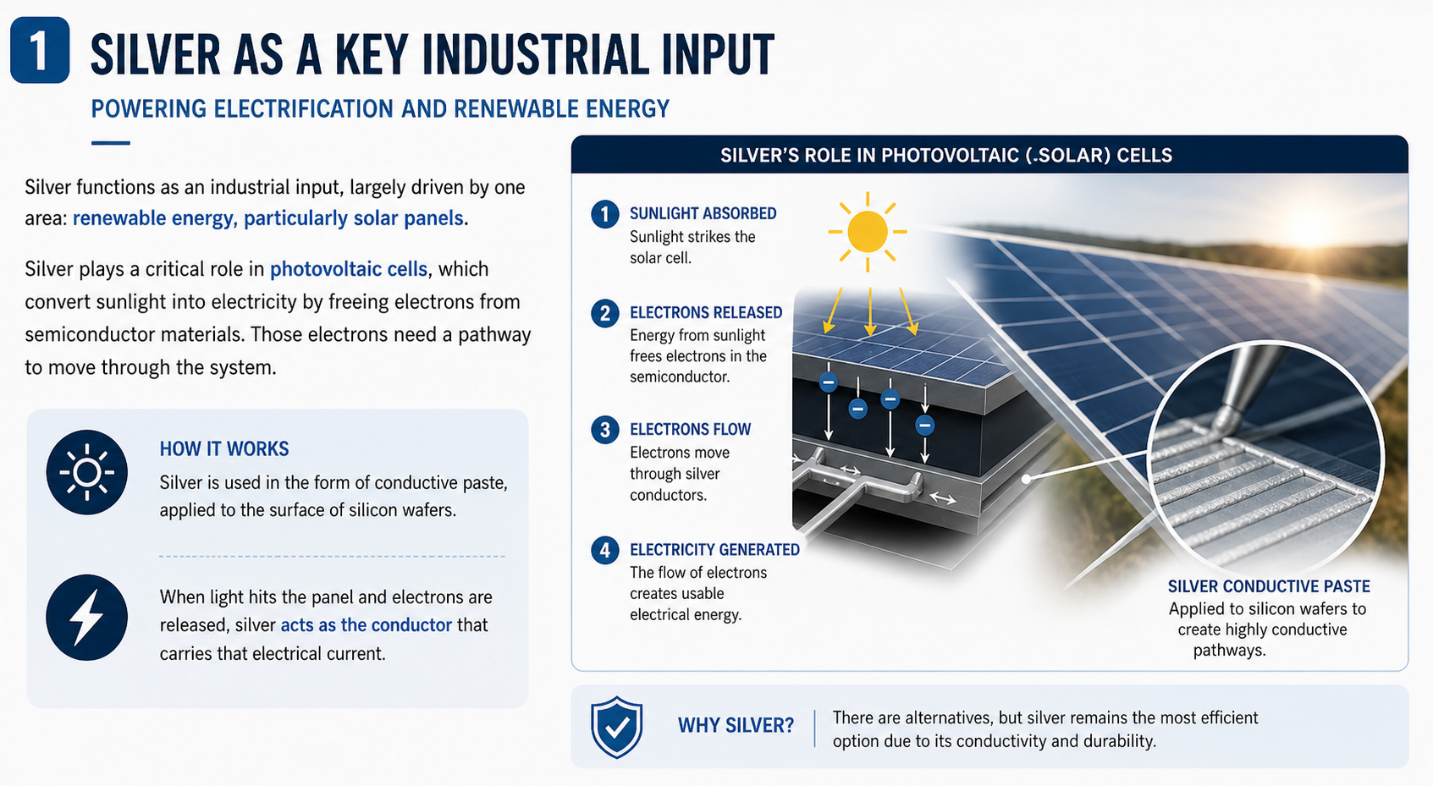
Silver functions as an industrial input, largely driven by one area: renewable energy, particularly solar panels. Silver plays a critical role in photovoltaic cells, which convert sunlight into electricity by freeing electrons from semiconductor materials. Those electrons need a pathway to move through the system.
Silver is used in the form of conductive paste, applied to the surface of silicon wafers. When light hits the panel and electrons are released, silver acts as the conductor that carries that electrical current. There are alternatives, but silver remains the most efficient option due to its conductivity and durability.
Source: Silver Institute as of May 5th, 2026.
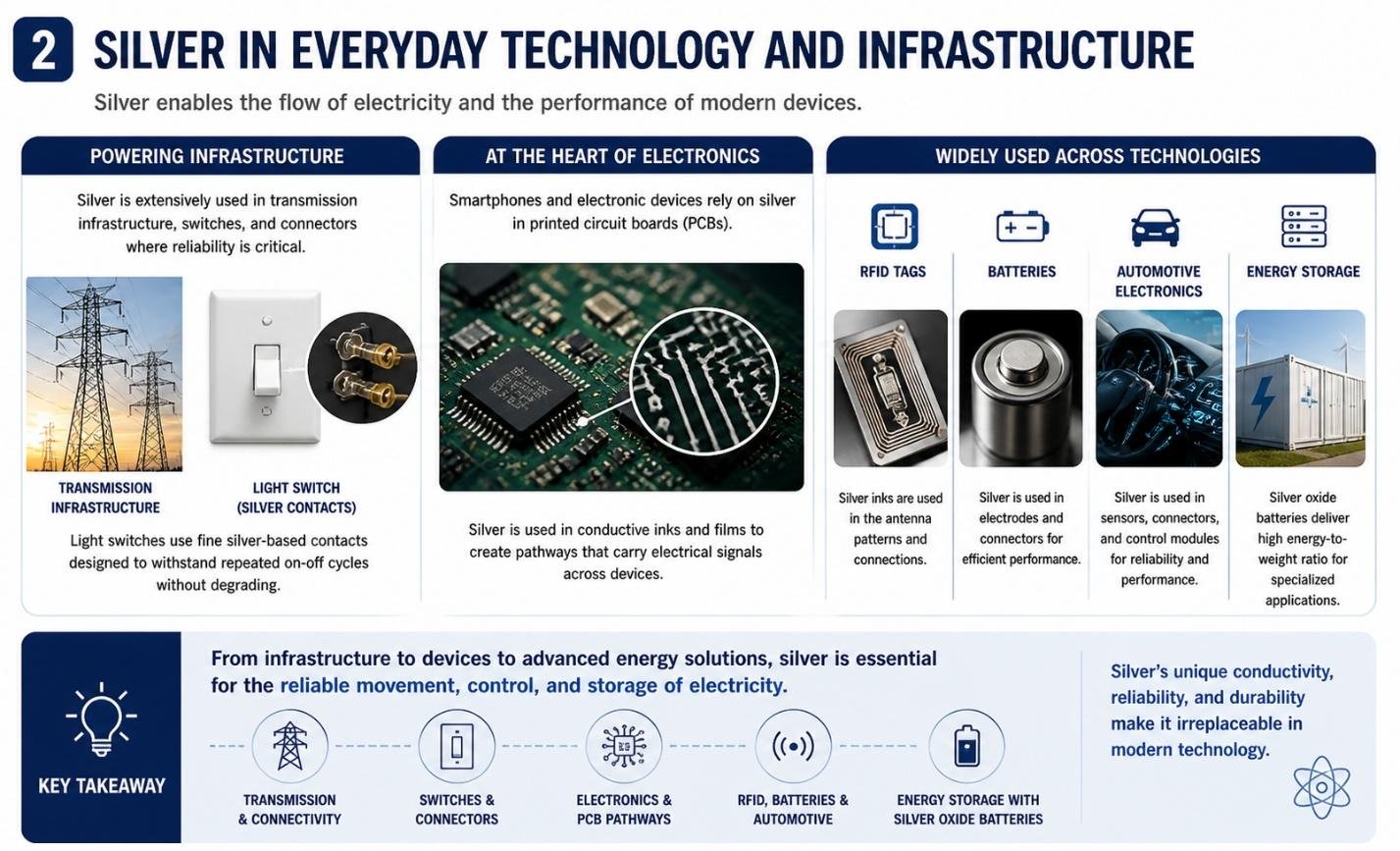
Silver is also extensively used in transmission infrastructure, switches, and connectors. The light switch on your wall likely contains fine silver-based contacts designed to withstand repeated on-off cycles without degrading.
Smartphones and electronics rely on silver in printed circuit boards, where it is used in conductive inks and films to create pathways for electrical signals. RFID tags, batteries, and automotive electronics all incorporate silver in similar ways. Even in energy storage, silver oxide batteries are used in applications that require a high energy-to-weight ratio.
Source: Silver Institute as of May 5th, 2026.
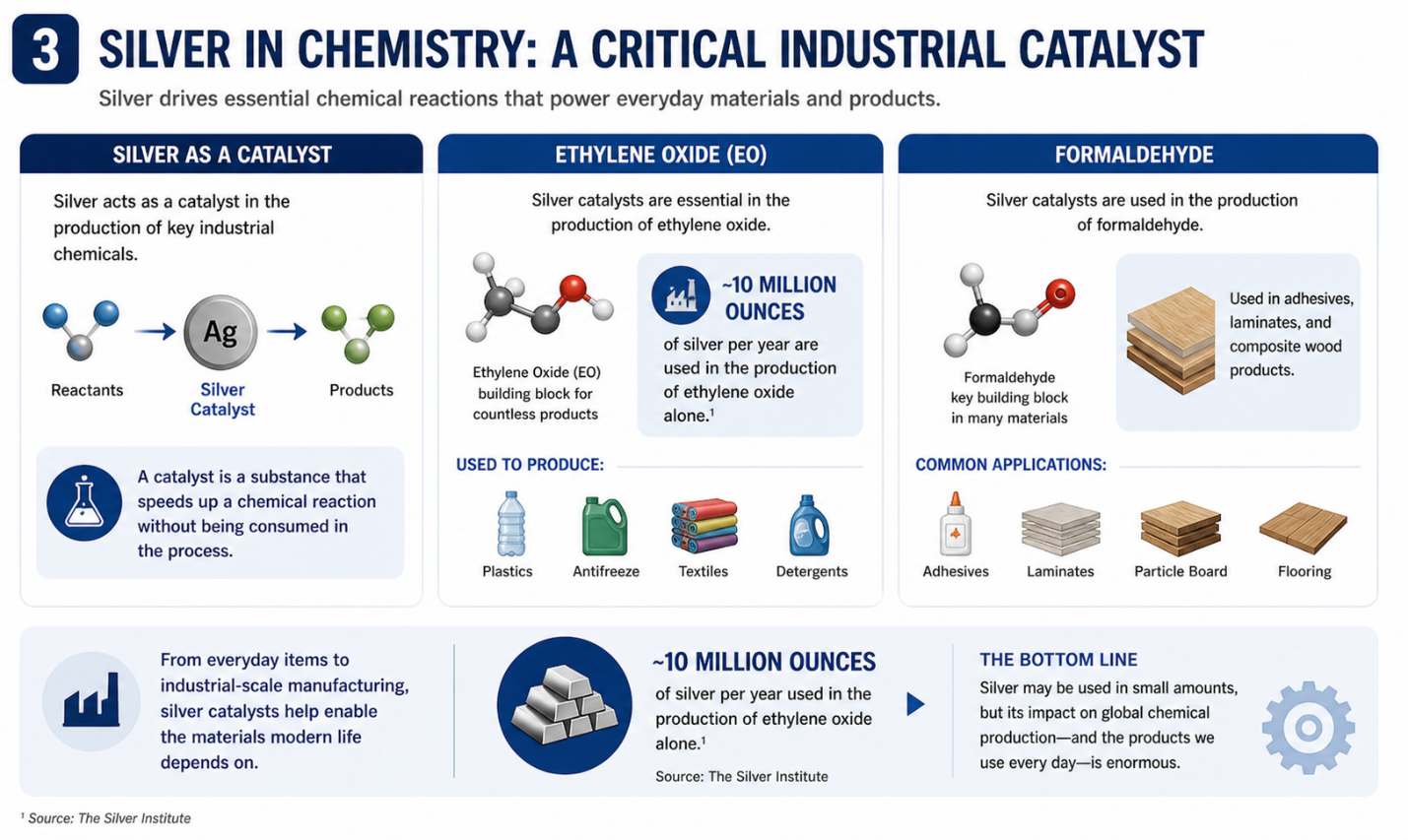
The industrial footprint extends further into chemistry. Silver acts as a catalyst in the production of key industrial chemicals such as ethylene oxide and formaldehyde. A catalyst is a substance that speeds up a chemical reaction without being consumed in the process.
Ethylene oxide is used to produce materials like plastics, antifreeze, textiles, and detergents. The Silver Institute estimates that nearly 10 million ounces of silver per year are used in this process alone. Formaldehyde is used in adhesives, laminates, and composite wood products. If you have particle board furniture or certain types of flooring, silver likely played a role in its production.
Source: Silver Institute as of May 5th, 2026.
Taken together, this paints a different picture of the metal. There are at least two major demand drivers. One is structural, tied to electrification and renewable energy. The other is ongoing, embedded in everyday industrial and consumer applications. Both draw from the same supply base.
And that brings the focus back to the core dynamic. When demand grows faster than supply in commodity markets, prices tend to adjust to balance the two.
Understanding the Silver Supply-Demand Imbalance
A January 2026 study published in Resources, Conservation and Recycling (Volume 224) attempted to forecast global silver supply and demand out to 2030.
The authors estimate that supply may only meet 62% to 70% of total demand by the end of the decade, translating to 48,000 to 54,000 tonnes annually. Solar demand alone could reach 10,000 to 14,000 tonnes per year by 2030, accounting for 29% to 41% of total silver demand.
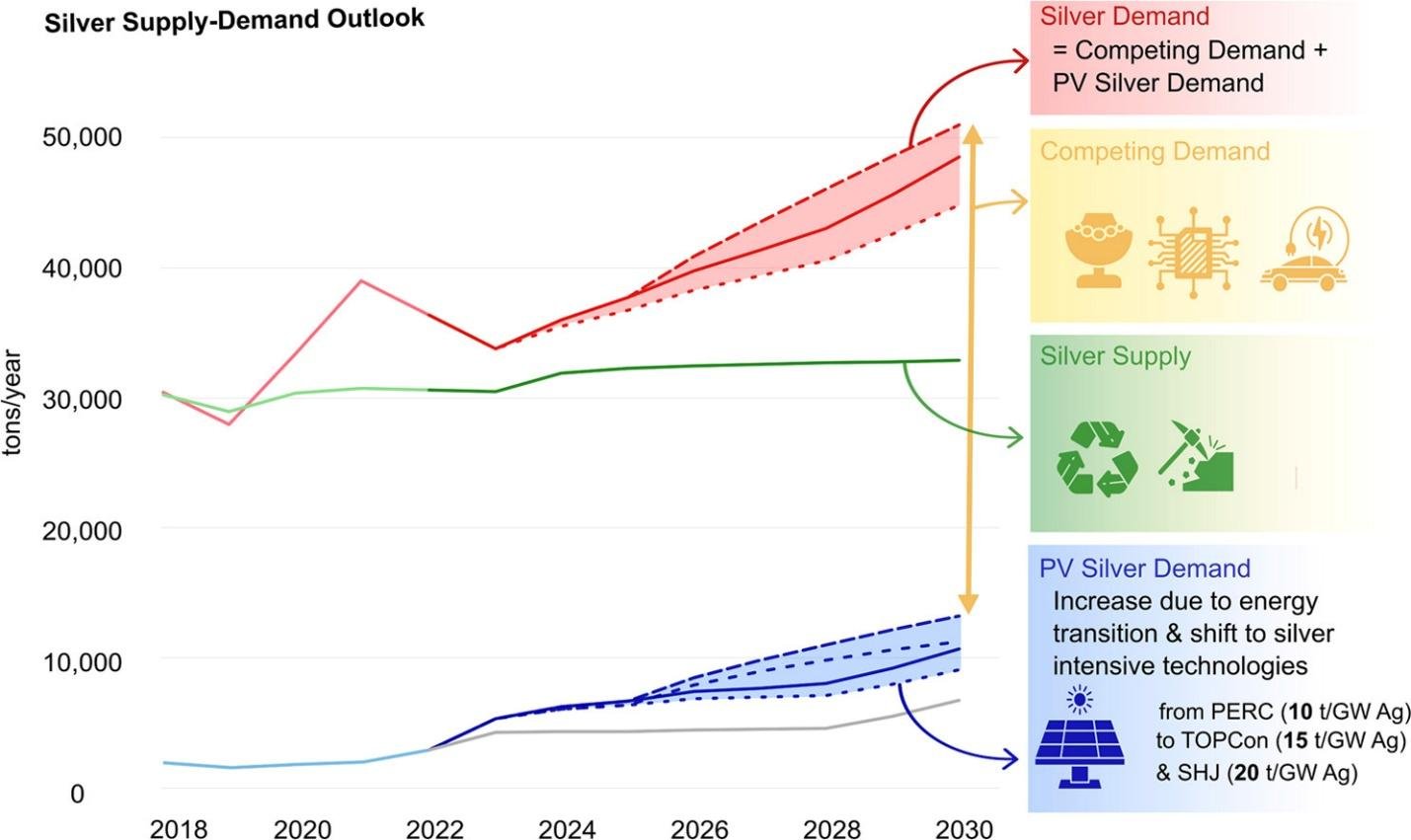
Source: ScienceDirect as of January 1st, 2026
However, supply is not as flexible as it might appear. Unlike gold, silver is rarely mined on its own. The study notes that roughly 72% of global silver production comes as a byproduct of mining for other metals such as copper, lead, and zinc.
That means supply is tied to the economics of those metals, not just silver itself. Even if silver prices rise, production cannot easily be scaled unless mining activity increases. This creates a potential structural constraint. If demand continues to grow, particularly from solar, supply may struggle to keep up.
That view is echoed by industry participants. The CME Group, which regularly publishes commentary from market participants, recently highlighted remarks from Keith Neumeyer, CEO of First Majestic Silver.
According to Neumeyer, the silver market has been running a structural deficit for four consecutive years, averaging roughly 240 million ounces annually, with expectations that the shortfall could widen further. That imbalance has started to show up in silver’s strong recent price action.
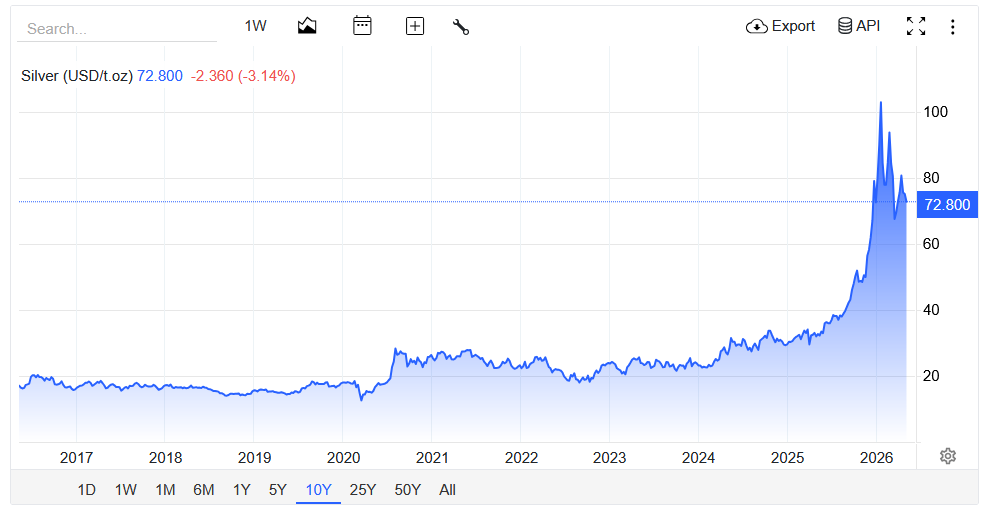
Source: Trading Economics as of May 5th, 2026.
Silver prices have moved higher in recent years, but so has participation in derivatives markets. CME data shows that silver options trading volume reached an all-time high of 18,027 contracts, with particularly strong interest in shorter-dated, weekly options. That type of activity typically reflects increased hedging demand and speculation around near-term price movements.
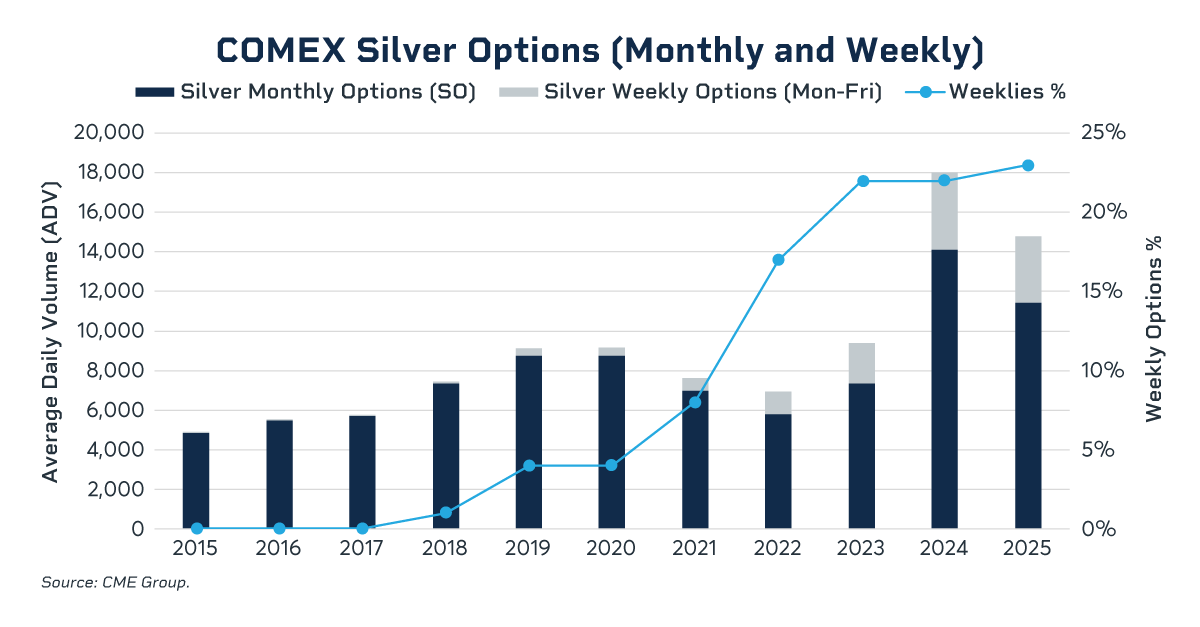
Source: CME Group as of March 13th, 2025.
At the same time, broader industry forecasts point to continued tightness. The Silver Institute has indicated that the market is expected to remain in deficit into 2025, driven largely by demand from photovoltaic cells and electrification trends. Michael DiRienzo, president and CEO of the Silver Institute, noted that global silver demand reached 1.2 billion ounces in 2024, with industrial demand rising 7% to around 700 million ounces, driven in part by electrification and renewable energy from solar.
This ties back to a broader issue that is often overlooked when discussing energy transition targets. When net-zero goals are discussed, the focus is usually on how much energy capacity needs to be built. Less attention is paid to the materials required to build that capacity.
One potential offset is thrifting, where manufacturers reduce the amount of silver used in applications or substitute it with cheaper materials. The earlier study also points to this, noting that “one viable alternative is to reduce silver consumption… by identifying substitutes and expanding secondary production.” That could ease pressure at the margin.
But for now, the broader dynamic remains intact. Demand is growing across multiple channels, supply is constrained by how silver is produced, and the resulting deficit continues to shape the market.
Bullion vs. Miners: Two Ways to Express a View on Silver
My neighbour prefers to buy silver directly. He is comfortable paying the dealer spread, transporting it home, and storing it securely. For him, silver is a long-term holding. The focus is on ownership, not income, tax efficiency, or portfolio construction. That approach comes with trade-offs.
Silver’s value is primarily driven by supply and demand speculation, not earnings growth. Moreover, it does not generate cash flow like dividend stocks or real estate, so you are relying on price appreciation alone. If you want income, physical silver ownership does not work.
That is where silver miners come in. These are the publicly listed companies that explore for, develop, and produce silver. In some cases, silver is their primary output. More often, it is produced as a byproduct of mining for other metals such as copper, lead, or zinc.
The key appeal of silver miners is leverage. Changes in the price of silver can translate into larger percentage changes in the earnings of a mining company, and by extension, its share price.
The reason comes down to cost structure, and the concept to understand here is all-in sustaining cost (AISC). AISC represents what’s needed to produce one ounce of silver, including operating expenses, maintenance capital, and overhead.
When silver prices are high, miner margins may expand more rapidly. When silver prices fall toward the cost of production, profitability can disappear just as fast. It’s a double-edged sword.
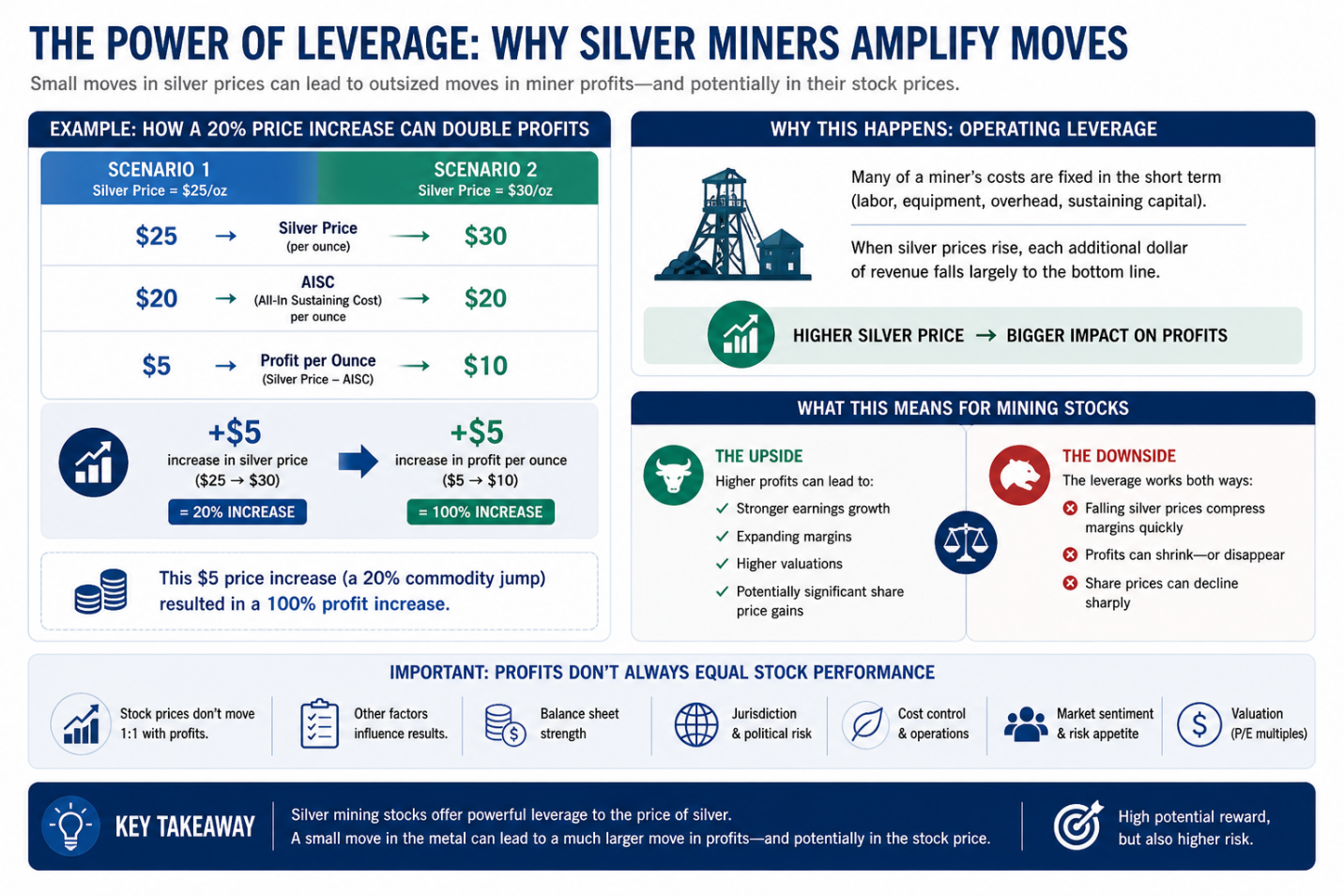
Source: Investing.com as of April 24th, 2026.
Beyond AISC though, there are other fundamental metrics silver investors need to consider that can materially affect earnings and share prices:
- Reserves life: How much silver a company has in the ground, how it is classified, and how long production can continue. These are depletion businesses.
- Head grade: The concentration of silver in the ore. Higher grades mean more metal per unit of material mined, which lowers costs.
- Recovery rate: How efficiently the company extracts silver during processing. Higher recovery improves output and margins.
Mining companies also face operational challenges, environmental liabilities, and geopolitical risks such as expropriation or nationalization. There are also company-level considerations like balance sheet strength, capital allocation, and potential dilution. All of this makes investing in individual miners a research-intensive and risky process.
The ETF Approach: Diversified Exposure to Silver Miners
For investors who want exposure to silver miners without selecting individual stocks, an alternative is a thematic ETF such as SLVX, which carries a 0.50% management fee.
SLVX tracks the Solactive Global Silver Miners Index, selecting companies based on revenues generated, or expected to be generated, from silver exploration and production. The Solactive Global Silver Miners Index typically holds between 20 and 40 companies.
Eligibility includes listings in developed and emerging markets, with exclusions such as India, China, and Taiwan due to geopolitical considerations. Companies must also meet minimum thresholds for liquidity and market capitalization to ensure investability.
Weighting is based on market capitalization, with constraints to manage concentration risk. The result is a diversified basket of silver mining companies across regions and operating profiles. But for investors with different objectives and risk tolerances, there are variations on that core exposure.
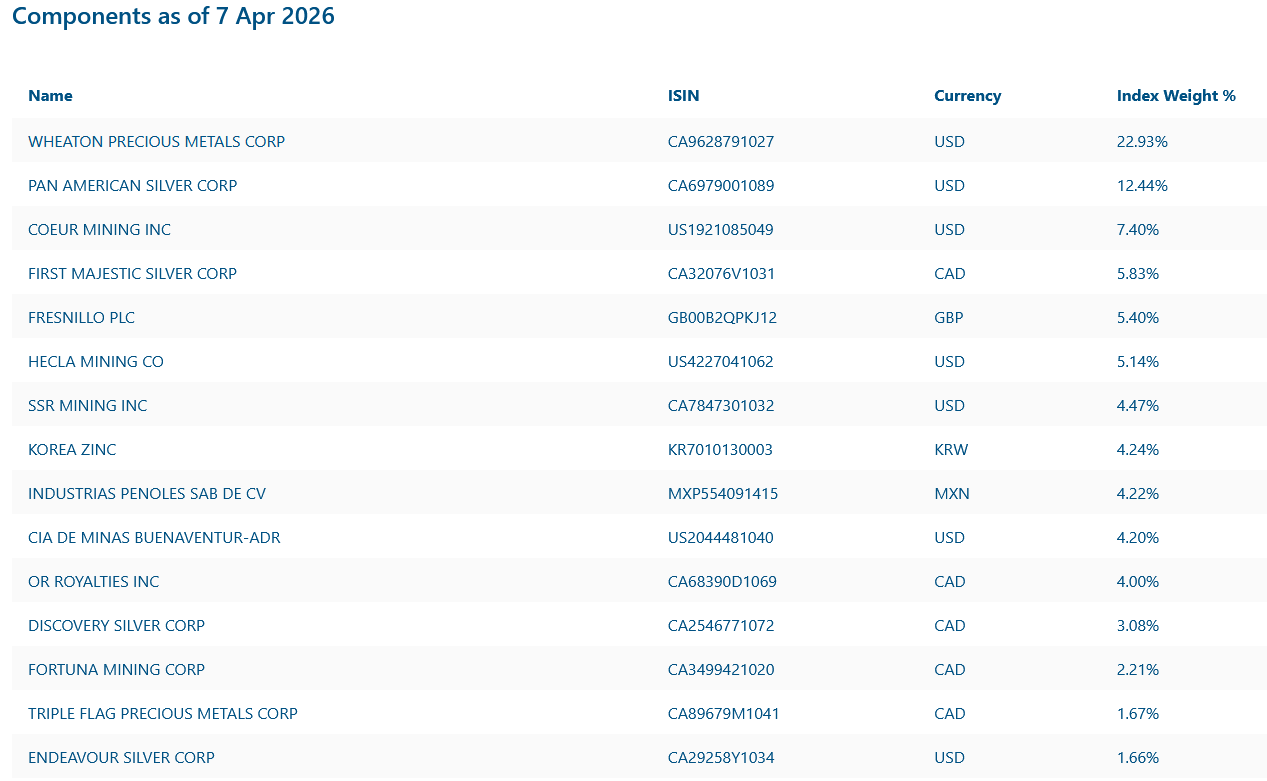
Source: Solactive as of April 7th, 2026.
For example, the Global X Silver Miners Covered Call ETF (SVCC) applies a dynamic options strategy, writing covered calls on the underlying holdings. This approach trades some upside participation in exchange for option premium income, which can increase during periods of higher volatility. Covered call writing can limit the upside potential of the underlying security.
At the higher end of the risk-return spectrum is the Global X Enhanced Silver Miners Covered Call ETF (SVCL). This strategy builds on SVCC but introduces modest leverage, targeting approximately 1.25x, or 125% notional exposure through cash borrowing.
SLVX, SVCC, and SVCL approach the same idea from a different angle. One focuses on broad exposure, another on income, and another on enhanced positioning. The common thread is access to a sector where underlying metal prices, operating leverage, and industrial demand all intersect.